

Industry Newsletter in Australia
Australia's Construction Industry in Crisis! Weekly Wages Far Above Average, Priority Hiring Pathways Open — These Roles Are in Highest Demand
While construction professionals in China are facing challenges, the scene on the other side of the globe — in Australia — looks entirely different.
As the new semester began, a jaw-dropping rumor began circulating online.
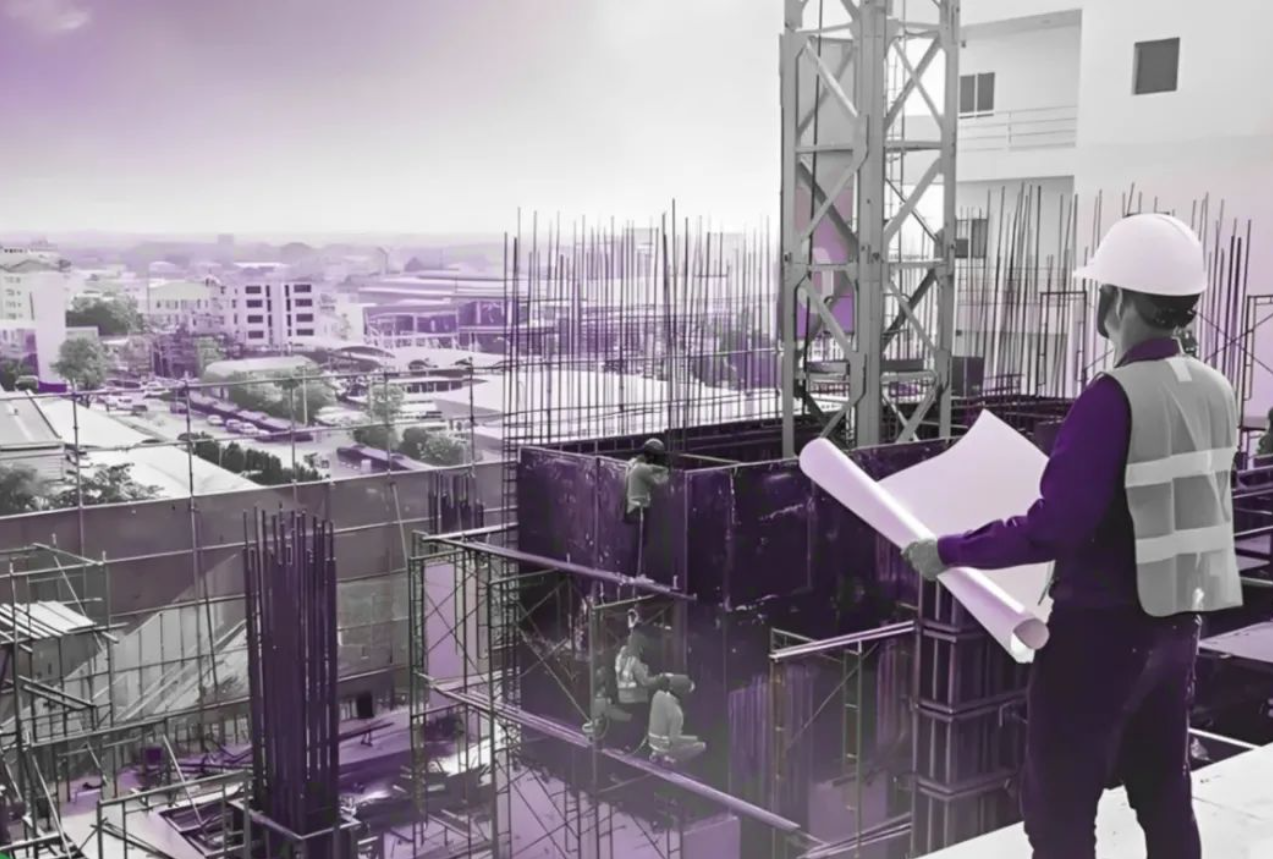
According to social media sources, “First-year architecture students at Wuhan University collectively switched majors — from 40-50 students, only 4 remained. The number of professors now exceeds students.”
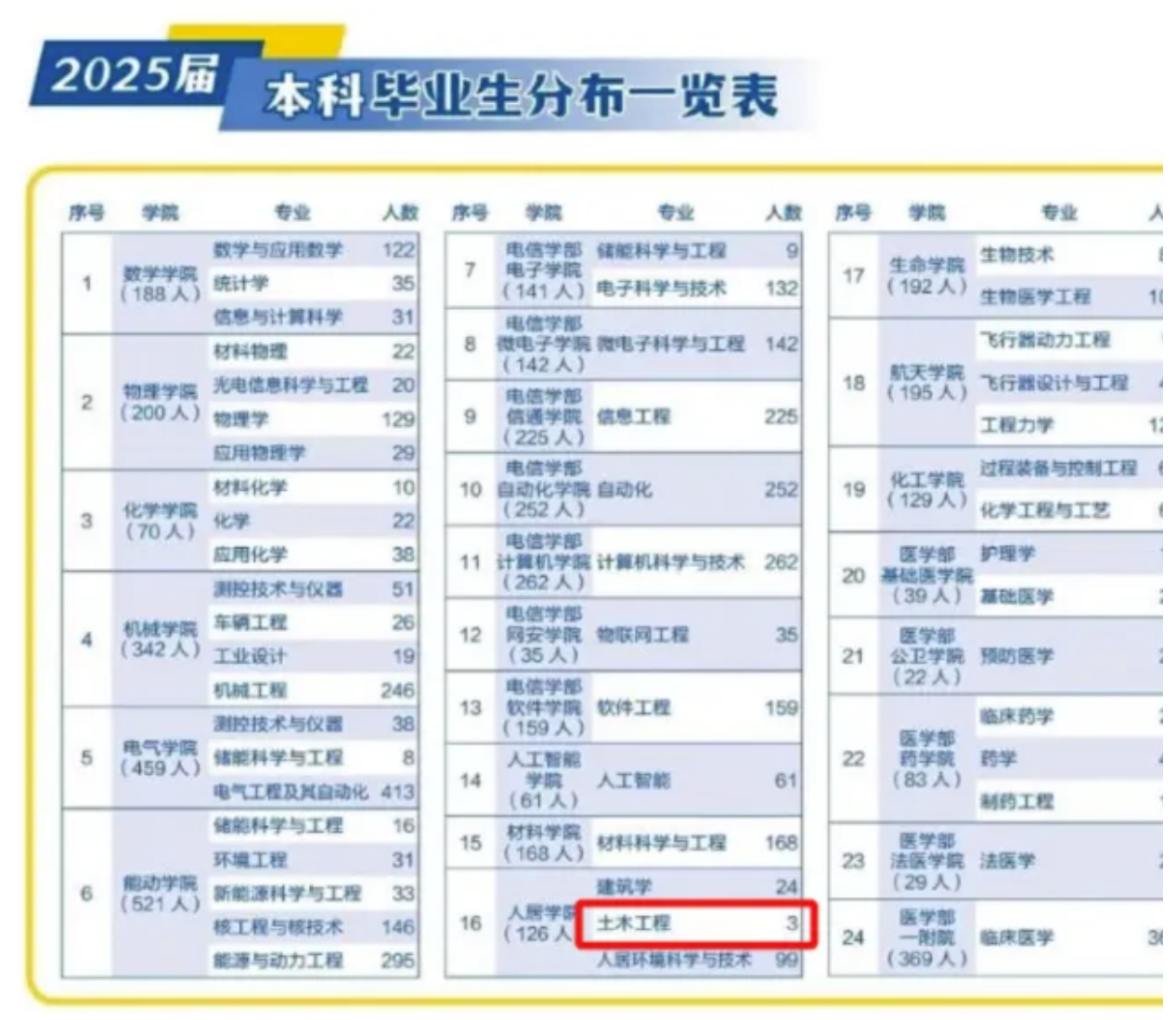
This claim sparked a heated online debate. While the accuracy of the information remains unverified and is likely false, it struck a chord with many — because it reflects a larger truth: civil engineering and construction-related majors are in real trouble across Chinese universities.
-
At Xi’an Jiaotong University, a top-tier C9 university, only 24 students are set to graduate with a degree in architecture in 2025, and just 3 in civil engineering.
-
At Sichuan University (985-tier), more than 100 students in architecture and civil engineering switched majors in 2024.
-
Shandong University, another prestigious 985 school, is even considering scrapping its civil engineering major entirely.
Meanwhile, on the Other Side of the Globe… Australia Paints a Different Picture
As China’s architecture talent pipeline struggles, Australia’s construction industry is booming — and desperate for workers.
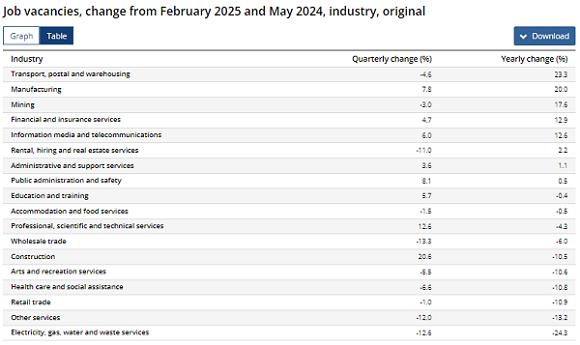
According to the Australian Bureau of Statistics (ABS), the construction industry saw the largest increase in job vacancies in June 2025 — a staggering +20.6% year-on-year.
Why Is Australia’s Construction Industry So Hungry for Talent?
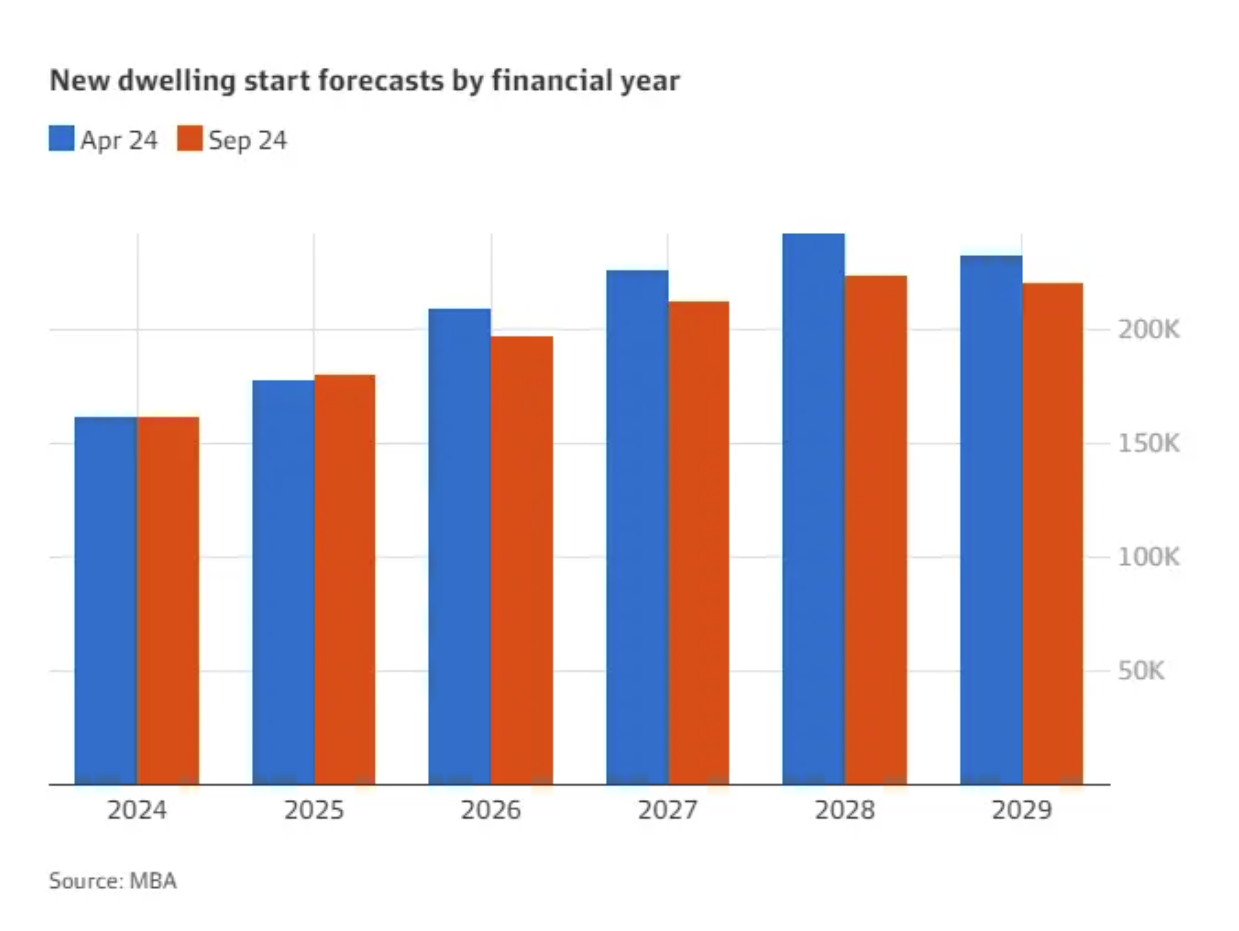
In 2023, the Australian government set an ambitious target: build 1.2 million new homes by 2029. Achieving this requires an additional 90,000 construction workers.
At the same time, major cities are ramping up infrastructure projects — like WestConnex and Metro West in Sydney — to prepare for the 2032 Brisbane Olympics.
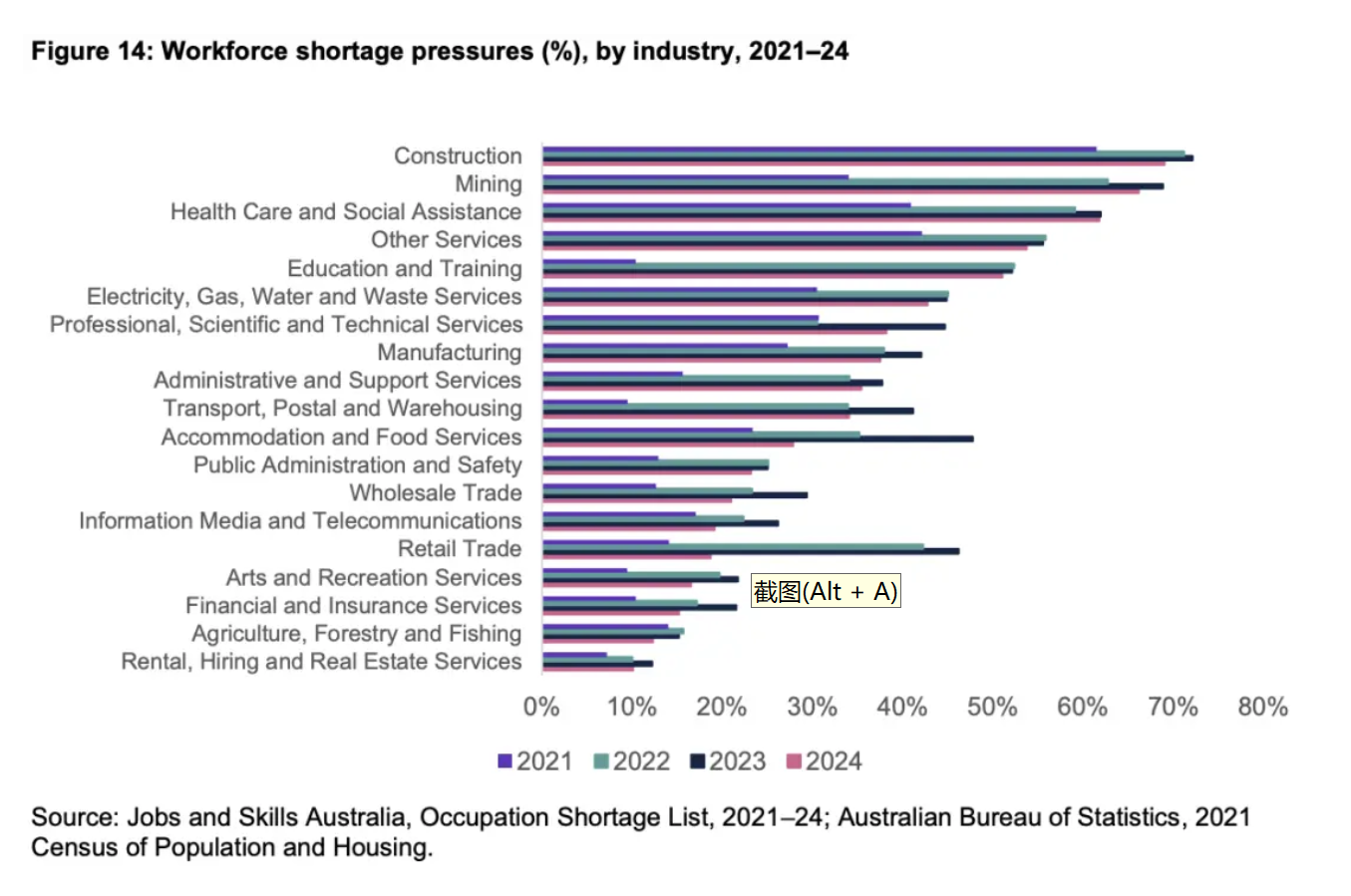
The Master Builders Australia predicts that over 130,000 additional workers are needed to meet housing targets alone. That doesn’t include workforce demand for large-scale infrastructure and home renovation projects, further widening the labor gap to 200,000+.
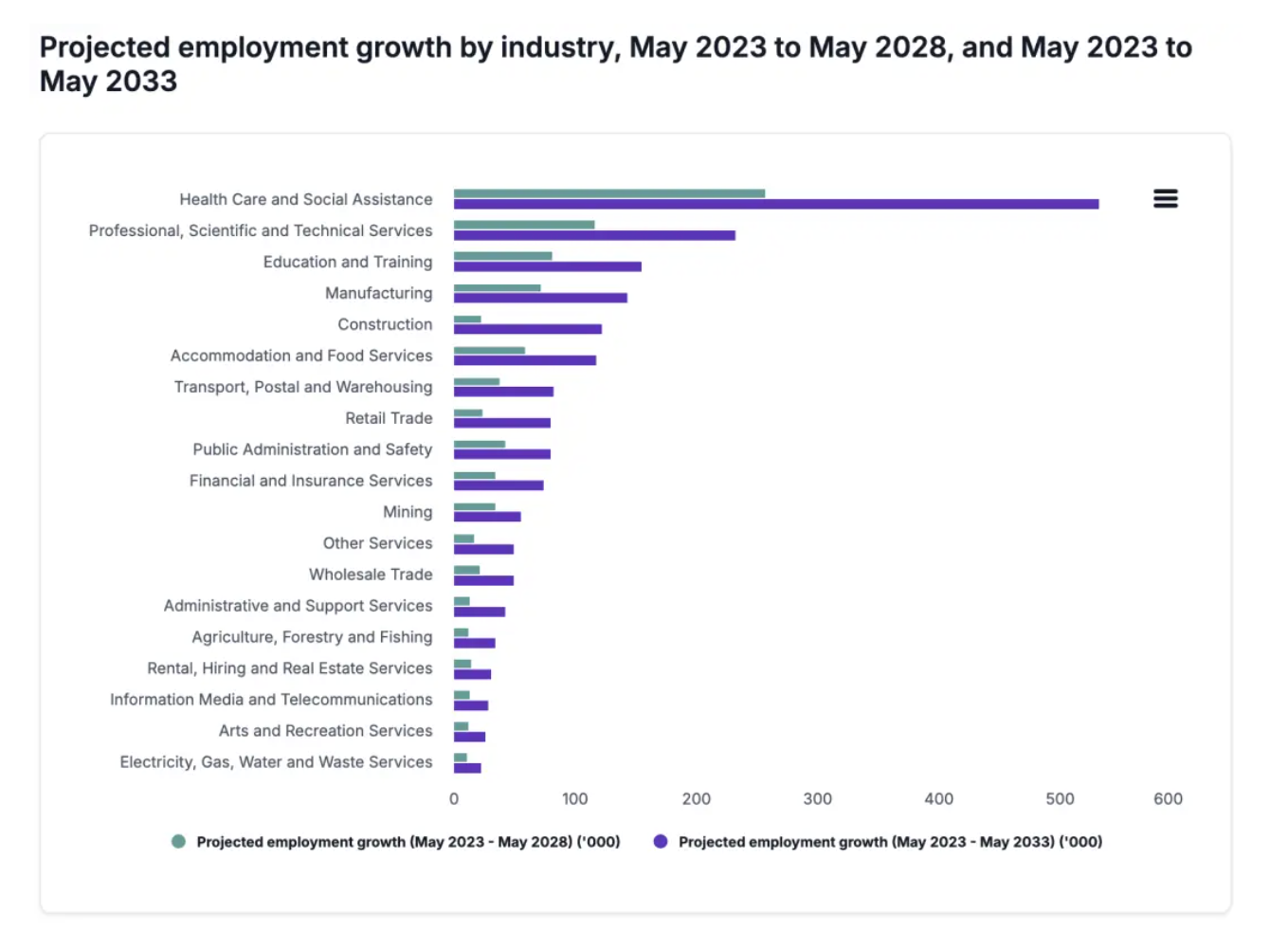
According to the latest employment projections from Jobs and Skills Australia, construction is set to grow by 122,600 jobs between May 2023 and May 2033 — making it the fourth fastest-growing industry after health care, science and technology, education, and manufacturing.
What Jobs Are in Highest Demand? How Much Can You Earn?
Construction isn’t just a vital industry — it’s a goldmine.
With an annual output of AUD 360 billion, the sector contributes 9% of Australia’s GDP.
Current top in-demand trades and their average weekly earnings (according to job market data):
-
Construction & Pipe Workers: 21,994 positions | $1,634/week
-
Electricians: 16,725 positions | $2,204/week
-
Carpenters: 7,737 positions | $1,787/week
-
Plumbers: 5,644 positions | $2,000/week
-
Structural Steel Workers: 1,008 positions | Up to $3,120/week
Other high-paying roles with fewer than 1,000 openings each include:
-
Plasterers, HVAC Technicians, Bricklayers, Tilers, Fence Installers, Cement Workers
These roles still offer weekly wages between $1,405 and $2,019.
📊 For context:
-
National average full-time salary: $102,742/year
-
Median full-time salary: $88,400/year
Construction jobs often pay 2–3 times higher than the average — a key reason why many are switching careers into this field.
States Are Competing for Talent: Policy Incentives Are Rolling Out
To close the skills gap, state governments across Australia are introducing policies to attract construction talent:
-
Western Australia has waived the job offer requirement for 190 visa applicants in the construction industry.
-
South Australia and regional areas now accept lower language scores (IELTS 5.5 instead of 6.0) for state sponsorship.
-
The federal government is investing AUD 90 million to recruit and train 20,000 construction workers.
From 2025, the government will offer:-
15,000 free TAFE/vocational training spots, and
-
5,000 pre-apprenticeship training places.
-
Immigration Goldmine: Construction Roles Fast-Tracked for PR
Due to the acute skills shortage, construction occupations are enjoying fast-tracked migration pathways.
In the 2024–25 migration program, many construction roles received invitations for Skilled Independent Visa (subclass 189) — often with lower points thresholds than nurses, early childhood educators, or even IT professionals.
What Is Life Like for Construction Workers in Australia?
Beyond high pay and strong job finding prospects, the work culture is also appealing:
-
Typical 9-to-5 hours; occasional evening overtime but weekends are usually free
-
Overtime is paid transparently: 1.5x on weekdays, 2x on weekends
-
Workers are paid hourly, ensuring fair compensation for every hour worked
🛠️ For example:
Wang, on a Working Holiday Visa, worked in construction in Darwin, Northern Territory, earning AUD 40/hour.
He worked 50 hours a week and earned over AUD 8,000 per month. Though the job was physically demanding and the lifestyle simple, he said the goal of saving money felt clear and achievable.
Take Action: High Pay + PR — A Win-Win Opportunity
Australia’s construction labor shortage is not going away anytime soon.
Jobs and Skills Australia projects 122,600 new construction roles between 2023 and 2033 — making it one of the most promising fields for future growth.
If you have a background in construction, civil engineering, or a desire for high income, work-life balance, and long-term job finding, this is your golden opportunity.
✅ Ready to Build Your Future in Australia?
JobABC can help you:
-
Match with high-paying jobs in the construction industry
-
Plan your PR job finding pathway
-
Connect with employers across all major states in Australia
👉 Contact JobABC today to start your journey toward a high-paying career and permanent residency in Australia!