

Industry Newsletter in Australia
Panorama of Australian beekeeping: the economic backbone of beekeeping
In the backyard of a tiny row house in Millers Point, Sydney, Ling Xiong raises more than 10,000 Ligurian bees in a beehive. She says, "I stand in my backyard and look at the bees and see them flying around with pollen on their legs and know that they've been working hard. It's very pleasing."
In the backyard of a small row house in Millers Point, Sydney, Xiong Ling breeds more than 10,000 Ligurian bees in a beehive. "I stood in the backyard watching the bees and saw them flying around with pollen on their legs and knew they were working hard," she said. It was very pleasant. ”
In Sydney, where the population is growing, Xiong Ling is one of many backyard beekeepers who aim to expand the bee population. Xiong Ling said: "The fruits produced by bee pollination account for 30% of our food, and bees are a very important part of the environment. ”
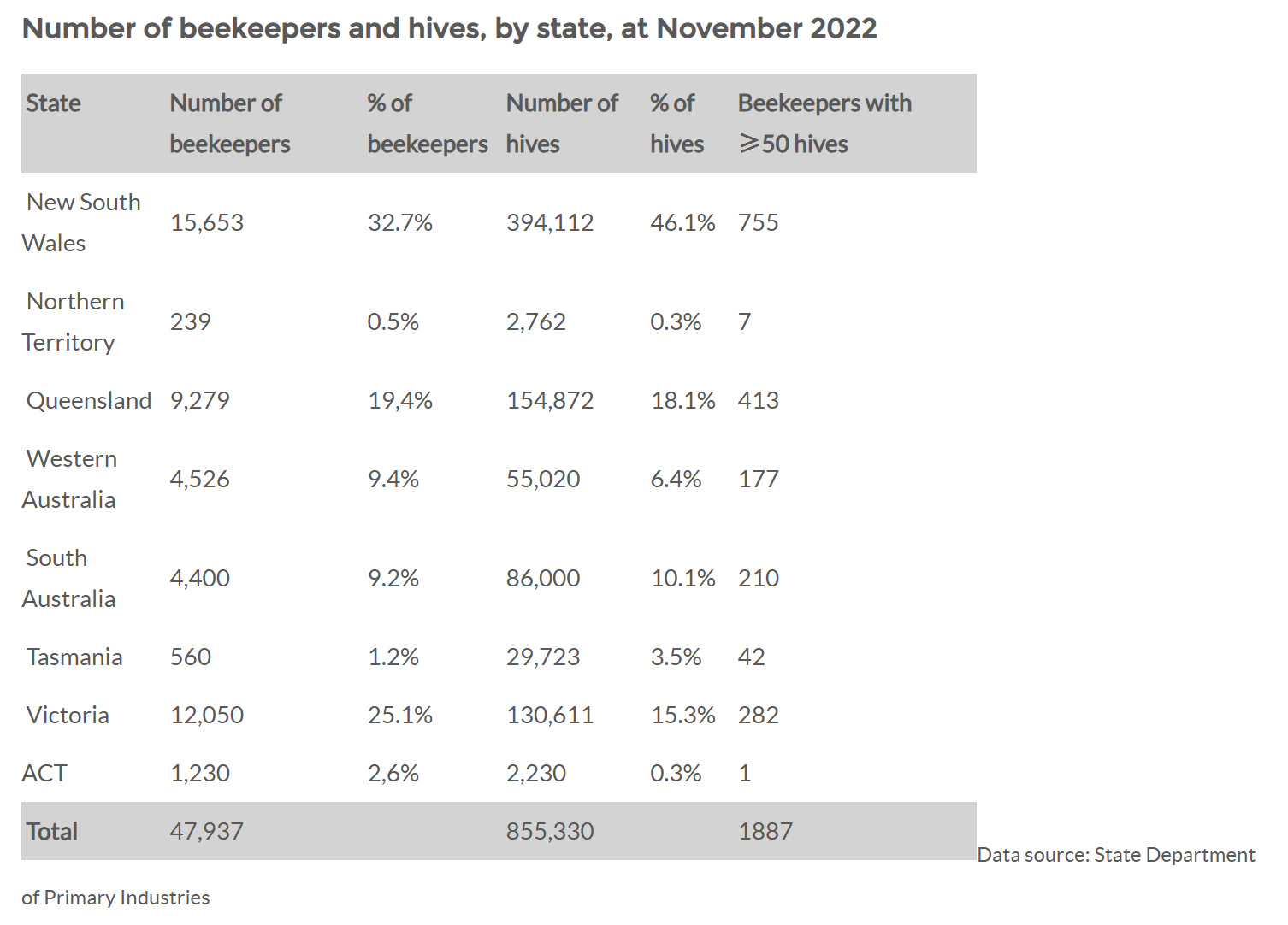
Australia is one of the top 10 honey producers in the world, with 48,000 registered beekeepers and a total of about 850,000 beehives. The large amount of honey produced in Australia is exported to various countries overseas in bulk and retail. Other bee products include beeswax production, queen bee and packaged bee sales, pollen, propolis, and paid pollination services; The total number of bee colonies increased from 532,000 boxes in 2019 to about 630,000 boxes in 2023, and the overall estimated gross domestic product (GVP) of the industry is USD 184.3 million per year.
The geographical distribution is dominated by the eastern coastal states, including New South Wales, Queensland, Victoria and Tasmania, and Western Australia in the southwest. For example, New South Wales has 15,600 beekeepers, accounting for 32.7% of the country, and more than 390,000 beehives.
Australian beekeepers mainly breed Ligurian bees, a species that is preferred for its docile nature and high honey production. In urban areas such as Sydney, many backyard beekeepers choose this species to harvest honey and provide pollination for urban greenery.
Pests and diseases that threaten the survival of bee colonies are becoming increasingly serious. In June 2022, the deadly Varroa mite was first detected near the port of Newcastle, Australia, and the epidemic spread rapidly.
31 bee farms in New South Wales have fallen one after another, and the state government has been forced to take extreme measures - euthanizing bees in 1,533 hives to curb the mass reproduction of parasites.
In addition to varroa mites, beekeepers also face the threat of pesticide contamination. Barry Foster, president of the National Beekeeping Association, once warned that "pesticide contamination" is one of the three major threats to bees.
The choice of beekeeping site is quite particular. The ideal site requires leeward and sunny, high and dry terrain without waterlogging, and at least one or two large areas of major honey plants within a radius of 2.5 kilometers around the year.
Sites can be acquired in a variety of ways: owned land, leased farmland or cooperative with farmers. The latter model is common in orchards that require bee pollination, achieving mutual benefit and win-win results. It is advisable to place no more than 50 colonies in a bee farm, with a distance of at least 2 kilometers between each field.
Equipment investment is an important cost for beekeepers. The purchase of basic equipment such as beehives, protective clothing, and honey shakers is expensive, and innovative technology is changing traditional beekeeping methods.
In 2015, two Australian beekeepers invented the Flow Hive beehive, which revolutionized honey harvesting. This innovative beehive makes collecting honey "as easy as opening a tap" without having to open the lid to disturb the colony.
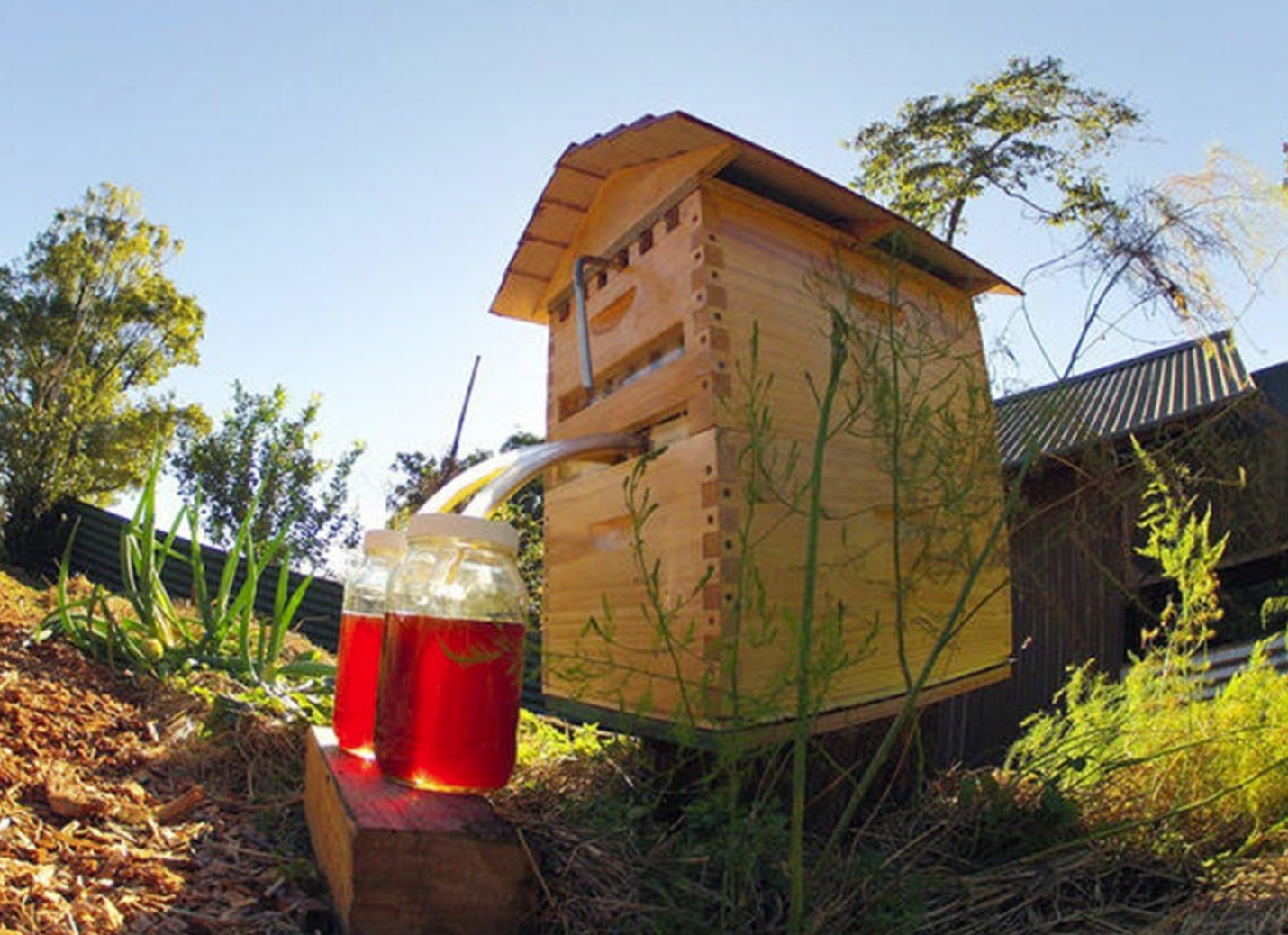
The invention was a huge success on crowdfunding platforms, with the first generation raising more than $2 million in 24 hours; Flow Hive 2, launched in 2020, set a new record, raising $14.8 million on Indiegogo.
Beekeeping industry associations play a key role in the Australian beekeeping industry. Industry organizations such as the Australian Honey Bee Industry Council (AHBIC) actively participate in policy formulation and provide professional support to beekeepers, including information services, policy feedback and rights protection. AHBIC plays an important role in lobbying and industry coordination on issues such as border control, mite response, pollination rules, and declining honey prices. Beekeepers are actively involved as a whole, especially commercial beekeepers. However, some family beekeepers are not registered or lack the awareness of participation, and their understanding of the role of associations is limited.
In terms of subsidies and tax incentives, the Commonwealth and State governments cover R&D and marketing through the Honey Levy (levy) and AgriFutures Australia, and some beekeepers can apply for disaster grants or biosecurity training grants.
In terms of quarantine regulations, interstate transportation of hives is strictly regulated and must be registered and tested (especially in mite risk areas). Knowledge promotion and training is provided jointly by Plant Health Australia, AHBIC.
Knowledge of the Australian beekeeping community varies widely. Commercial entities are generally familiar with and benefit from the policy process, while there are still a number of information gaps among small and recreational beekeepers.
Climate change has emerged as the biggest challenge for the Australian beekeeping industry. 70% of beekeepers across the country list drought as their top threat and 50% are concerned about the negative impact of agrochemicals on honey output.
In 2025, the South Australian beekeeping industry is hit hard. Honey production in the region is less than 10% of what it was in previous years as drought destroys the bees' natural food sources. South Australia's 77,000 hives, which typically produce more than $15 million a year, have seen revenues plummet this season.
“The lack of food for the bees has had a huge impact on hive strength,” explains Davies, President of the South Australian Beekeepers Association, “and even when the trees are able to flower, there is very little nectar and pollen available, leading to starvation for the bees.”
In the face of disaster, the Australian government has responded proactively. Disaster response methods include mobilizing colonies in advance to avoid danger, backing up colonies for backup, decentralizing deployment to different ecological zones, and developing resilient bee varieties. At the same time, the timing of bee relocation is chosen in conjunction with weather forecasts to rebuild colony resources after a disaster and increase the resilience of the industry.
Most commercial beekeeping is done by moving across state lines, renting farmland or borrowing pristine forest land for honey harvesting or pollination activities. Permits are required for public land use.
Site selection requires consideration of flowering timing (e.g., eucalyptus, manuka), climatic conditions, neighboring crop needs (e.g., almond orchards), and transportation and relocation logistics costs.
Owned land is less common, mainly in large enterprises with hundreds of hives, and the choice of site can reduce long-term rental and transportation costs.
Direct sales mainly include farm-gate sales, farm stands, and farmers' markets for small or specialty honey brands, accounting for about 20-30%.
Through distributors and retailers: large beekeepers or brands sell through supermarkets and specialty stores, which dominate the market, accounting for about 40-50%.
E-commerce platforms have grown rapidly in recent years, such as Amazon Australia, local e-commerce, overseas exports, especially exporting high quality Manuka honey, accounting for about 20% of the total
The Australian beekeeping industry is characterized by a pattern of “a small number of large-scale operations + a large number of recreational beekeeping”. Commercial beekeeping relies on pollination services and the export of high quality honey as its main sources of income, while family beekeeping focuses more on ecological conservation and the local consumer market. Biological threats such as mites and natural disasters are forcing the industry to shift to a more standardized and technologically advanced business model. At the same time, industry organizations and government policy support are becoming increasingly critical to keep future beekeepers afloat despite the challenges.
For beekeepers interested in migrating to Australia, JobABC has created an exclusive channel for them.
Apiarist is on the MLTSSL (Medium and Long-term Strategic Skills List) Medium and Long-term list for Australian migrants, with specific responsibilities including:
1. farming livestock for the production of honey, meat, milk, hides, eggs and wool
2. overseeing and conducting breeding, feeding and nutrition programs monitoring and maintaining the health, welfare and condition of livestock, including developing and overseeing strategies to manage biosecurity and other risks
3. provide water, offer and grow pasture and fodder crops to maintain the health and condition of livestock
4. organizing agricultural operations and routines, such as catching, drenching and milking livestock, sterilizing machinery, and collecting, grading and packing agricultural produce
5. directing and supervising general agricultural activities, including the provision and maintenance of infrastructure such as fences, sheds, paddocks, water supply systems and irrigation infrastructure
6. organize the sale, purchase and transportation of livestock and agricultural products
7. maintain and evaluate records of agricultural activities, monitor market activities and plan production accordingly
8. overseeing data collection and analysis and farm technology systems
9. manage business capital, including budget, tax, debt and loan management may select, train and supervise employees and contractors